Legacy software modernization for companies in Germany
Your company runs on software that nobody dares to change, perhaps because the person who built it has left. I make the code readable first and then replace it piece by piece while the old system keeps running, with AI coding agents under written rules. I take on freelance and project work, remote from Frankfurt. Let's talk about your needs in a free 30-minute video call.
What changes for your company
-
Experience with inherited systems
For more than twenty years I have written software and taken over systems that others built. I change old code in steps small enough that your staff keep working as before.
-
Current work on a monolith
I help a client replace its monolithic application piece by piece, together with the client's team and with Claude and Codex. The new API has more than 300 endpoints.
-
The code explained first
Before an agent changes a line, it queries a knowledge graph built from the code and its documentation. It learns who calls that part and which earlier decisions shaped it.
-
The old system keeps running
New parts take over one function at a time while the old software serves the rest. Each step goes live on its own, and your staff test it in their daily work.
-
Agents with limited rights
The AI agents read the database and cannot write to it, and they cannot push to production. A person approves each production change outside the chat.
When nobody dares to touch the software
Legacy software is software a company depends on and can no longer change with confidence. Its age matters less than what is missing around it: the developer who knew it, tests and documentation. Typical signs:
- A small change takes weeks, because nobody knows what else it touches.
- Updates of the server or the programming language wait, because the software might not run afterwards.
- One person, often outside the company, knows how the system works.
- An AI assistant or a new tool cannot connect, because the software has no API.
How I modernize legacy software
I read before I change. The approach below comes from current client work, in which a monolithic application is replaced piece by piece with AI coding agents under written rules.
The first step is a map. A knowledge graph is built from the code and its documentation, and an agent may change a part only after it has queried the graph for that part. It then knows the callers and the earlier decisions, which a new colleague would ask a teammate about.
Tests come next. They record what the software does today, including the odd cases that users rely on, and they run before each change goes live.
New functions go into an API with a versioned path and a written contract in OpenAPI. The old software hands over one function after another, and your staff keep working in it until a function has moved.
The agents work under the rules the staff follow. Their database role reads and cannot write, the production branch is protected, and a hook checks each tool call before it runs. A production change needs the confirmation of a person, given outside the chat.
The old part goes offline once checks prove that nothing reads or writes it anymore. A table that falls out of use gets a marker in its name and stays in the database until that proof is done.
Five routes for legacy software
The routes I weigh with a client before the first line changes. The third one is the route of the client work described above.
| Route | What happens | When it fits | Risk |
|---|---|---|---|
| Document and test | A knowledge graph, documentation and tests go around the existing code, and the code stays | The software works and changes are rare | The old platform ages further and still needs its security updates |
| API in front | The old system keeps running, and other tools reach it through a new API | Other systems or AI tools need its data | The old code stays behind the API |
| Replace piece by piece | New parts take over one function at a time until the old system can go offline | The software changes often and the business cannot pause | Two systems run side by side for a while |
| Rewrite from scratch | A new system is built next to the old one and replaces it on one day | The old software is small, or its purpose has changed | Behavior nobody wrote down gets lost, and new features wait until the switch |
| Standard software | A product replaces the custom software | Your processes match what the product does | The processes change to fit the product |
Developers call the third route the strangler fig pattern, after a fig that grows around a host tree and replaces it over the years.
Who I am
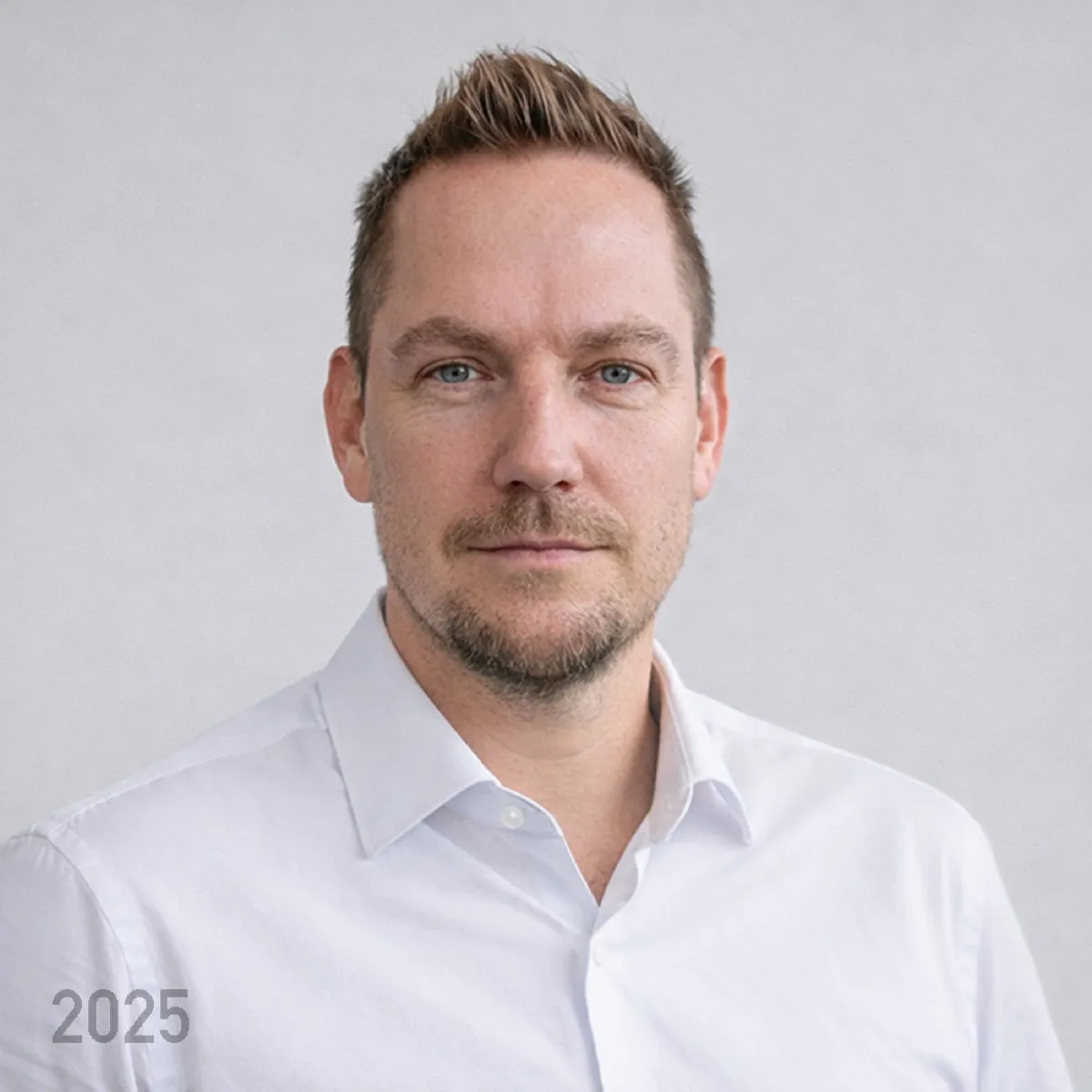
I am Michael Wutzke, based in Frankfurt, with more than twenty years in IT and media. At the Frankfurt-based company Blocksize Capital I took over a running oracle price-data network and its internal documentation as Head of Decentralized Finance and Node Operations, and later became CIO. Before that I programmed front ends and back ends of online shops for Lidl and REWE. I teach at Claude Hacker House and build software with Claude and Codex. I am also interested in open-source AI agents that a company runs on its own servers. Details: Career stages.
How the modernization runs
-
Free video call
In 30 minutes we talk about the software, what it does for your business and what hurts today.
-
Assessment together
We look at the code and the servers together and talk to the people who still know the system.
-
Quote and order
You receive a quote for the first stage. The work begins when you accept it.
-
Map of the code
A knowledge graph built from the code and its documentation shows which parts call each other and where the data goes.
-
Tests around today's behavior
Tests record what the software does now, odd cases included. A change that breaks one of them fails before it reaches your staff.
-
Replacement step by step
An API takes over one function after another. The old part goes offline once a check shows that nothing calls it anymore.
-
Handover
Your team receives the code, the tests and the rules for the agents, and continues with its own developers or its own AI agents.
Questions companies ask
Do we have to rewrite everything?
No. A rewrite from scratch has to rebuild behavior that nobody wrote down, while the old software still needs changes. Replacing it piece by piece keeps the old parts running until the new ones have proven themselves.
Can AI agents work on our code without risk?
They work under the limits a new colleague has on the first day: read-only access to the database, access tokens for the development environment and no access to the production branch. A check before each tool call blocks what a rule forbids. Details: AI agents under the same rules as humans.
Our developer left without documentation. Can you start anyway?
Yes. The first stage produces the documentation: a knowledge graph of the code and tests that record what the software does today.
Which technologies do you work with?
PHP, Python and Node.js on the server side, Angular, React and TypeScript in the browser, REST APIs with OpenAPI, and Claude and Codex as coding agents.
Where does the software run afterwards?
On your own servers, at a hosting provider in Germany or in a cloud, whichever fits your company. The cloud side I know from AWS, where I hold the Solutions Architect Associate certification, and from Azure and Google Cloud.
Which engagements do you take on?
Freelance and project work, part time or full time, remote from Frankfurt. For a longer modernization I also take on an interim role in which I lead your developers through it.
Details on the work behind this page
-
AI agents under the same rules as humans
Limits at the resource, a blocking check before each tool call, and approvals that only a person gives.
-
Virtual organizations of autonomous agents
AI agents can work like a team, but few know how to lead them reliably. I test how roles and rules keep them on track.
-
Node operations and a cloud migration with failover
Blockchain nodes and an oracle network in several data centers, then a move from Azure with failover.
Your legacy software modernization consultant in Germany
I am Michael Wutzke, a legacy software modernization consultant in Germany, based in Frankfurt. In a free 30-minute video call we talk about the software your company depends on, and you learn which route fits it and what a first stage would cover.
Searches this page answers
- legacy software modernization
- legacy software modernization services
- legacy modernization consulting
- legacy system modernization consulting
- legacy modernization
- legacy modernization services
- legacy application modernization
- legacy application modernization strategies
- legacy application modernization using ai
- legacy system modernization
- legacy system modernization approaches
- legacy system modernization strategies
- legacy modernization with ai
- legacy system modernization with ai
- legacy code modernization
- legacy code modernization using ai
- refactoring legacy code
- refactoring legacy code with ai
- refactoring legacy codebases
- modernize legacy systems
- modernize legacy apps
- modernizing legacy applications in php
- strangler fig pattern
- strangler fig pattern example
- legacy system replacement
- legacy system migration strategy
- legacy system risks
- legacy system problems
- legacy software maintenance
- legacy software support
- legacy codebase
- technical debt
- technical debt reduction
- rewrite vs refactor
- software rewrite vs refactor
- legacy systems examples