AI infrastructure engineer in Germany
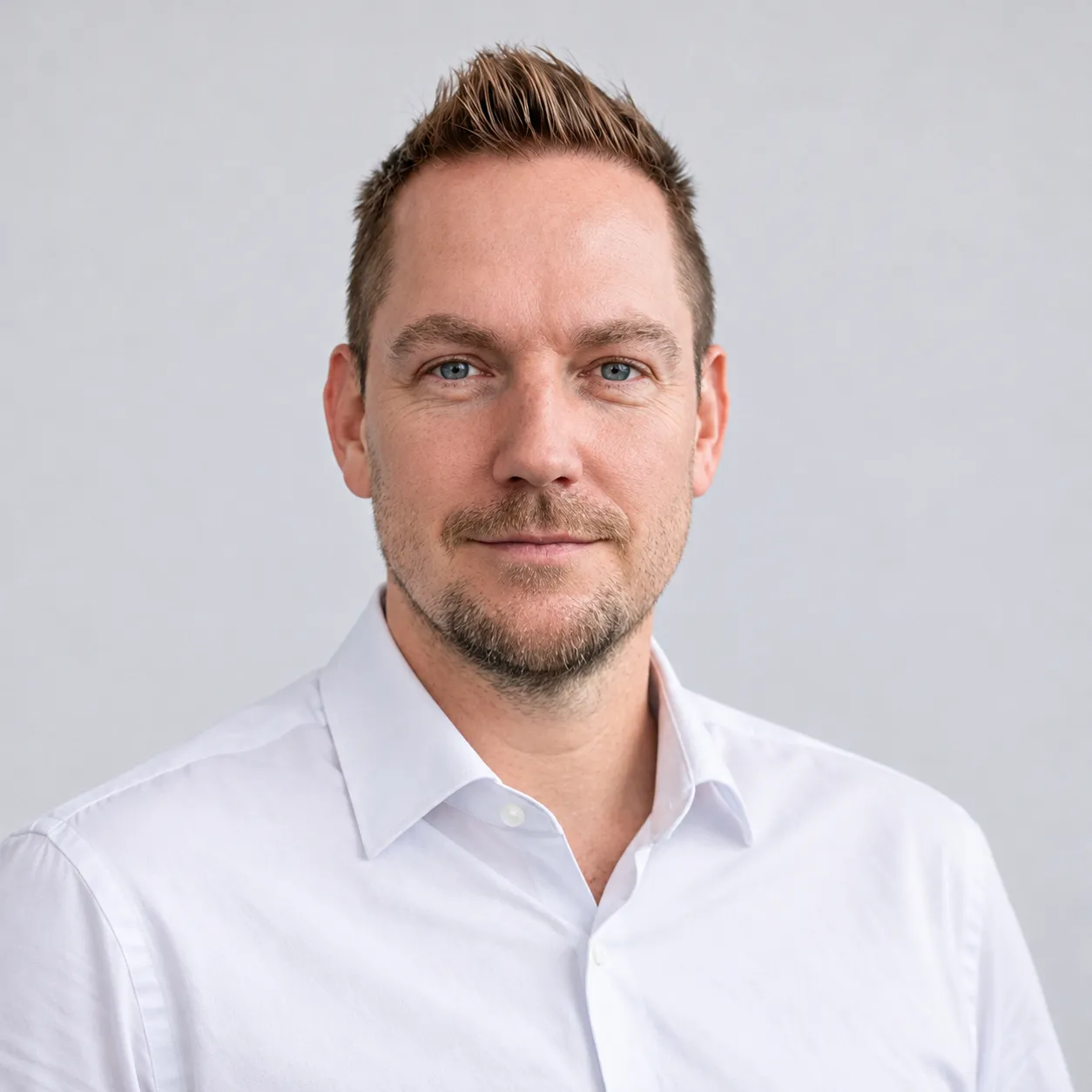
Companies in Germany hire an AI infrastructure engineer to run open-weight models such as DeepSeek, Qwen or Mistral, and the agents that use them, on servers they control. I am Michael Wutzke, an IT expert for data platforms in Frankfurt, and I have run servers in data centers and clouds for more than twenty years. I work as a freelancer or permanent employee, remote or on site in Frankfurt Rhine-Main. Book a 30-minute video call. We look at your task, and you find out whether I can help.
What I bring to your team
-
Experience with systems others depend on
For more than twenty years I have run systems that staff and customers rely on, from racks in data centers to cloud regions. I size the infrastructure for the people who use it.
-
Data centers by hand
I installed servers, switches and firewalls in data centers in Germany and the United States myself. I know what a rented cloud machine does below its API.
-
Nodes that must not stop
At a Frankfurt fintech I ran blockchain nodes and an oracle network in several data centers and built the node operations team. A second site took over when the first failed.
-
A model you can replace
My agents run on Claude and Codex under one rule file that the Gemini CLI reads too. Rules and memory live outside the model, so an open-weight model or another harness can take a cloud model's place.
-
Limits at the resource
An agent I set up reads the database but cannot write to it, and its credentials cannot push to production. Hooks with a test matrix block forbidden calls before they run.
-
Based in Frankfurt
I live in Frankfurt and work remote across Germany, with on-site days in Frankfurt Rhine-Main or where your servers stand. I work in German and English.
What an AI infrastructure engineer does
An AI infrastructure engineer runs a company’s models and agent software, and the servers under them. The work covers the server or cloud region, the serving software that answers requests, the model, the agent harness and the rules for who may call what. An AI engineer builds the applications on top.
On your own servers, prompts and documents stay on machines you choose, and the model version changes only when your team decides.
Open weights and open harnesses, checked in September 2026
Both halves of the stack are available under open licenses, the model and the harness around it.
DeepSeek released a preview of DeepSeek V4 on April 24, 2026, in two sizes, V4-Pro and V4-Flash (announcement). The weights of DeepSeek-V4.1-Flash are published under the MIT license, with instructions for vLLM and SGLang on the model page. DeepSeek’s own API accepts the OpenAI and the Anthropic format (API docs), so software written for either format reaches it after a change of the base URL. The licenses of Qwen, Mistral and gpt-oss are compared on Self-hosted LLMs such as DeepSeek.
DeepSeek Harness is an open-source agent harness from DeepSeek under the MIT license. It runs on Node.js, and everything in it is a plugin (GitHub). InfoQ reported on August 20, 2026, that a change in its configuration file moves the model between remote API providers and local runtime servers (InfoQ). The project is a developer preview, and its maintainers announce breaking changes.
The model and the harness are parts your team can exchange. The engineer you hire keeps the rules and the access limits in place while they change.
The job description, layer by layer
The table lists what an AI infrastructure engineer runs and the part of my work each layer draws on. Hold it next to your own job description.
| Layer | What the engineer does | Where my experience comes from |
|---|---|---|
| Hardware | Sizes and runs servers in your rack or at a hosting provider | Servers, switches and firewalls I installed in data centers in Germany and the United States; 40 load-balanced servers for a web community |
| Cloud and failover | Runs the service in a cloud region with a second site | AWS, Azure and Google Cloud; a node operation moved from Azure to another cloud with failover |
| Services that stay up | Keeps software running for users who depend on it | Blockchain nodes and an oracle network in several data centers, on bare metal and in the cloud, set up as scripts and Docker containers |
| Serving the model | Installs serving software such as vLLM, with a token per application and a log of the requests | A setup I plan for companies; the server work above carries over |
| Agent harness | Runs Claude, Codex or an open harness under the company’s rules | Claude and Codex under one rule file that the Gemini CLI reads too, with rules and memory outside the model |
| Access and limits | Decides what an agent may read and change | A read-only database role, scoped tokens, a protected production branch and hooks with a test matrix |
| Data | Connects the model to the company’s data through APIs | A client platform, rebuilt with Claude and Codex, has more than 300 RESTful API endpoints and more than 8,000 commits |
Who I am
I am Michael Wutzke, an IT expert for data platforms in Frankfurt. I have spent more than twenty years from code to CIO in finance, e-commerce and real estate, with cloud platforms and data centers. Today AI agents speed up how I build and transform data platforms.
In client work I rebuild a platform with Claude and Codex under one rule file. I teach at Claude Hacker House. I have run blockchain nodes in several data centers. I hold the AWS Solutions Architect Associate certificate.
From the first call to your servers
-
Video call
In 30 minutes we talk about the models your team plans to run on its own servers and the engagement you have in mind.
-
Technical interview
Your infrastructure team asks about my work on servers and with agents, in a conversation or at a shared screen.
-
Reading ahead
The pages linked below describe that work, so your team can check the details before the interview.
-
First weeks
I start on site in Frankfurt Rhine-Main or at your data center to learn the machines and the people, then work remote for the most part.
Questions companies ask
Which engagements do you take on?
Freelance projects and permanent positions, part time or full time, remote for the most part with on-site days in Frankfurt Rhine-Main or where your servers are.
Have you run DeepSeek or Qwen in production?
My agents in client work run on Claude and Codex. The setup keeps rules and memory outside the model, so an open-weight model such as DeepSeek or Qwen can replace a cloud model without a new rule set. Servers in data centers and a failover between two sites are work I have done for blockchain nodes.
How does an AI infrastructure engineer differ from an AI engineer?
An AI engineer builds applications on a model. An AI infrastructure engineer runs the model, the harness and the servers under them, and decides who may call them.
Do you train models?
No. I run and connect models that others have trained. Training a model on your own data is the work of an ML engineer.
Which harness would you run?
The one that fits your team's rules after a test. DeepSeek Harness is MIT-licensed and in developer preview, and its maintainers announce breaking changes. I would run it next to the harness your developers use today before it carries production work.
Details on the work behind this page
-
Running infrastructure
More than 20 years of running IT infrastructure: on servers in office server rooms, in data centers and in the cloud.
-
Node operations and a cloud migration with failover
Blockchain nodes and an oracle network in several data centers, then a move from Azure with failover.
-
AI agents under the same rules as humans
Limits at the resource, a blocking check before each tool call, and approvals that only a person gives.
-
Self-hosted LLMs such as DeepSeek for companies in Germany
Your AI infrastructure engineer in Germany
I am Michael Wutzke, an AI infrastructure engineer in Germany, based in Frankfurt. In a 30-minute video call we talk about the models and servers your team plans to run, and you learn whether my work in data centers and with agents fits your plans.
Searches this page answers
- AI infrastructure engineer
- AI infrastructure engineer remote
- AI infrastructure engineer job description
- AI infrastructure engineer vs AI engineer
- LLM infrastructure
- LLM inference engineer
- self hosted AI infrastructure
- open source AI infrastructure
- open source model deployment
- AI agent infrastructure stack