Frankfurt - City of Finance - Hub for DeFi and Blockchains
Frankfurt is an international financial center, a transport hub and a trade fair city. Economically, the German metropolis is one of the world’s major cities, which also shows in its high-rise skyline. Frankfurt is the seat of the European Central Bank, the Deutsche Bundesbank, the Deutsche Börse, numerous financial institutions (including Deutsche Bank, Commerzbank, DZ Bank, KfW) and the supervisory authorities BaFin and EIOPA.
Decades of steady internationalization have made Frankfurt very multicultural compared with other European cities. More than 50% of the residents now have a foreign passport or an immigrant background. You hear a jumble of different languages on the streets, and English is the working language of choice at many international companies. The developments around Brexit also bring companies and people from all over the world to the Frankfurt financial center.
How well is Frankfurt connected?
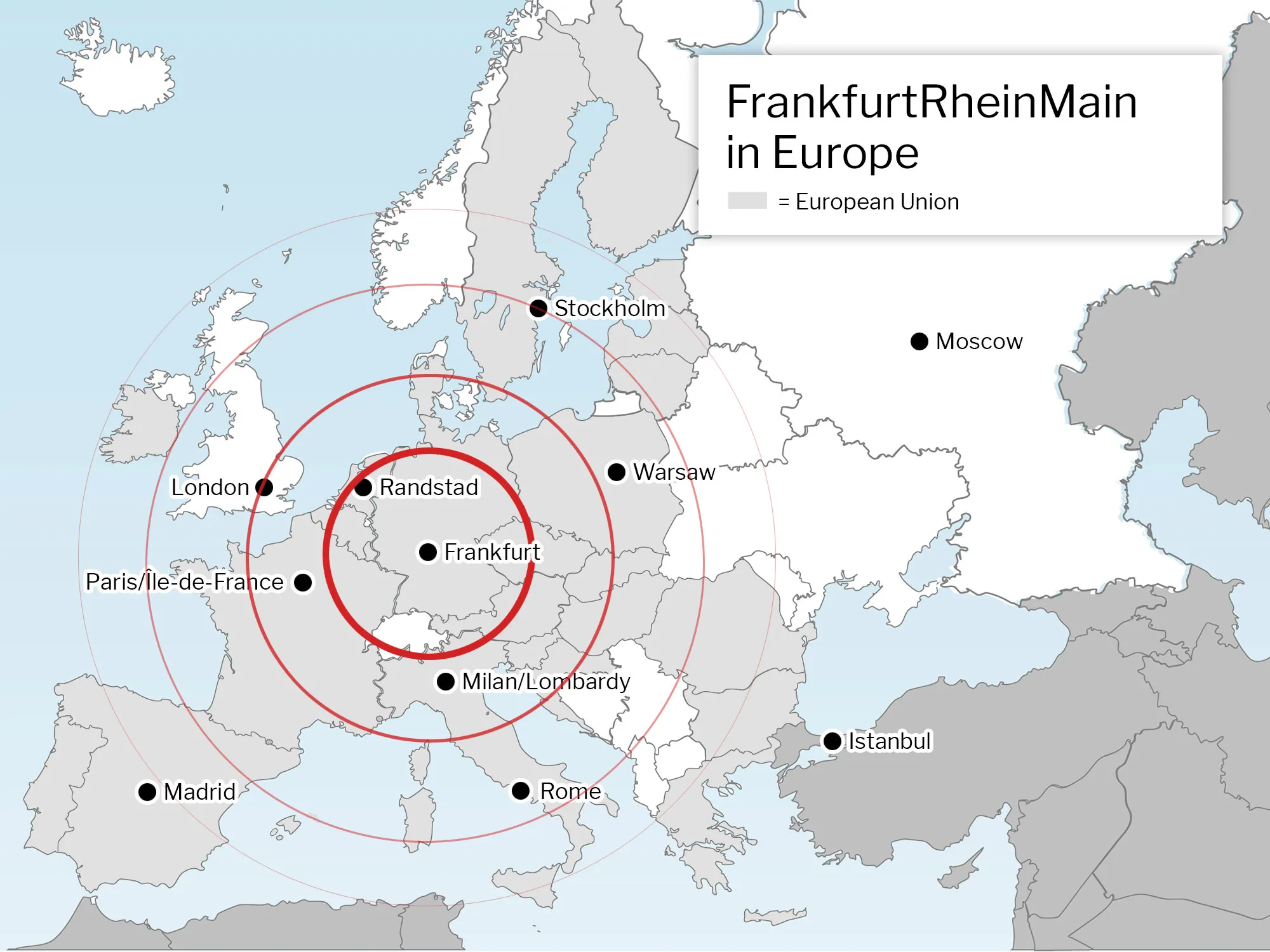
Frankfurt is very easy to reach from abroad. Since 2020 the geographic center of the European Union has been in Gadheim near Würzburg, about 90 kilometers southeast of Frankfurt. Its central location has made the city an important hub for people, goods, and data. Frankfurt is home to one of the world’s largest airports, Germany’s largest train station, and DE-CIX, the world’s largest exchange node for internet traffic. This makes Frankfurt the best location if you want to be easy to reach. A fun fact: in January 2023 Frankfurt was the world’s #1 city for bitcoin nodes, with 652 nodes.
How many people live in Frankfurt?
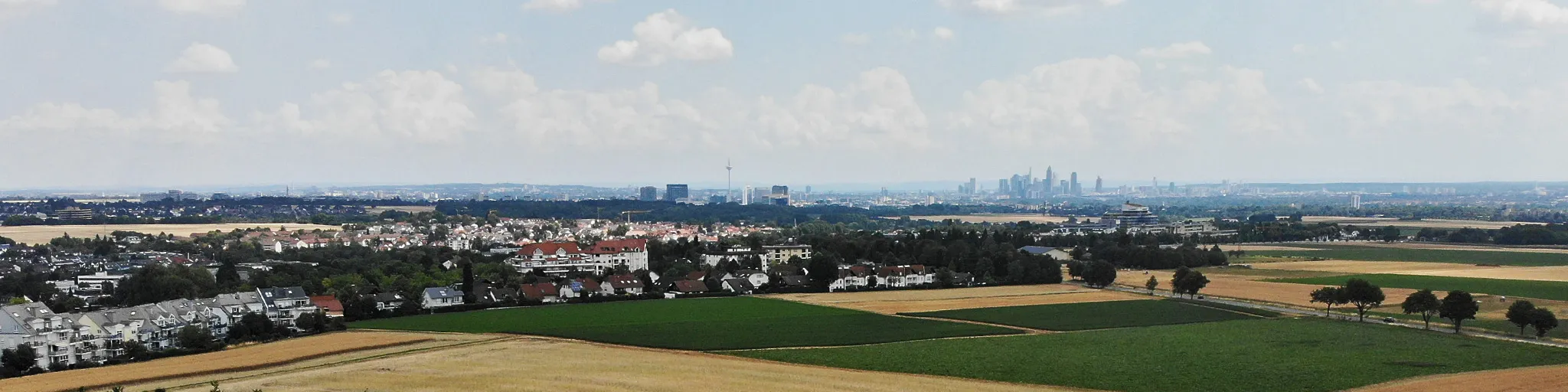
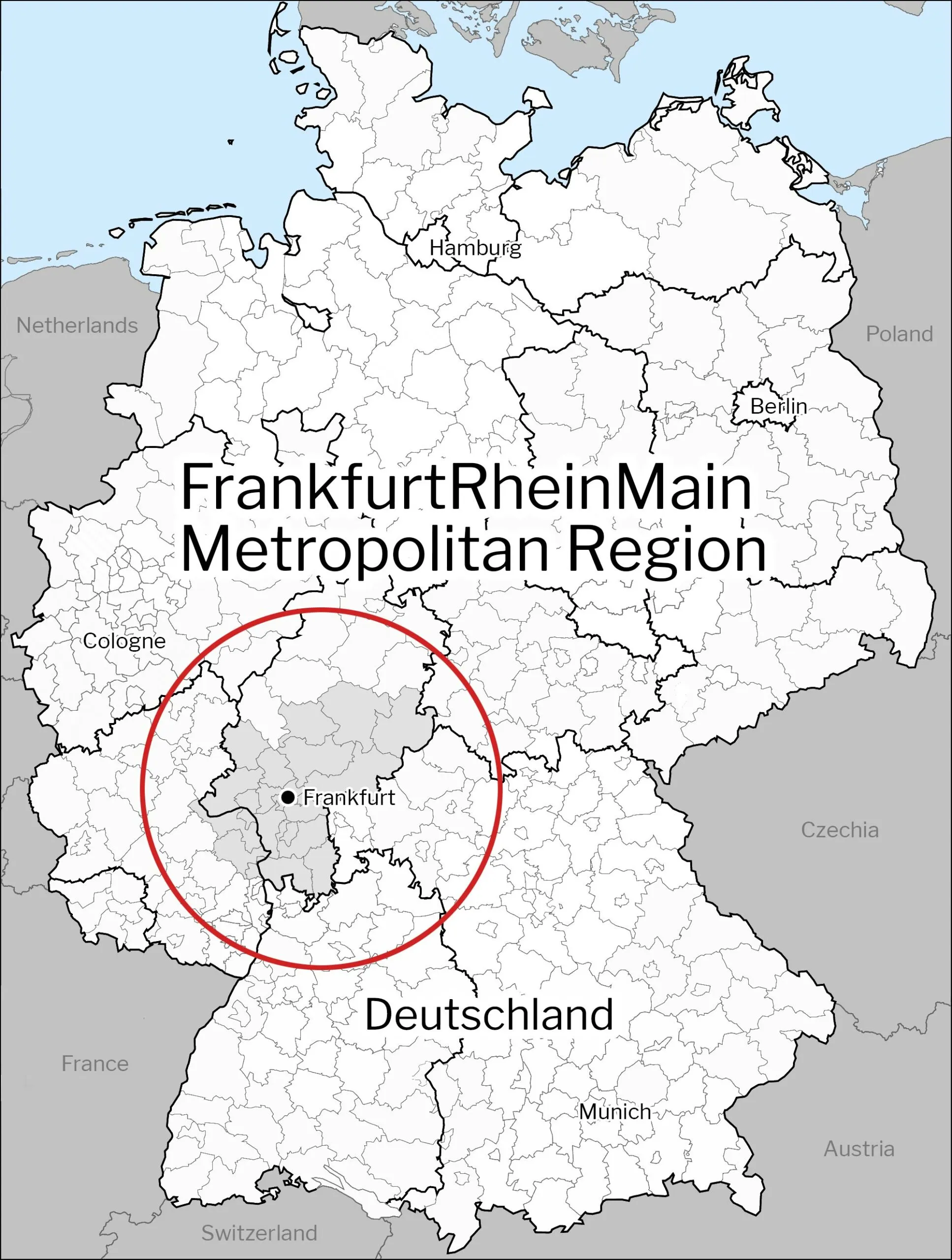
Frankfurt had 776,835 residents on June 30, 2026, according to the statistics office of the city. The FrankfurtRheinMain metropolitan region is home to about 5.8 million people, according to the regional association. This makes the region one of the economically strongest in all of Europe. On average, skilled workers in Frankfurt earn around 20% more than in other German cities.
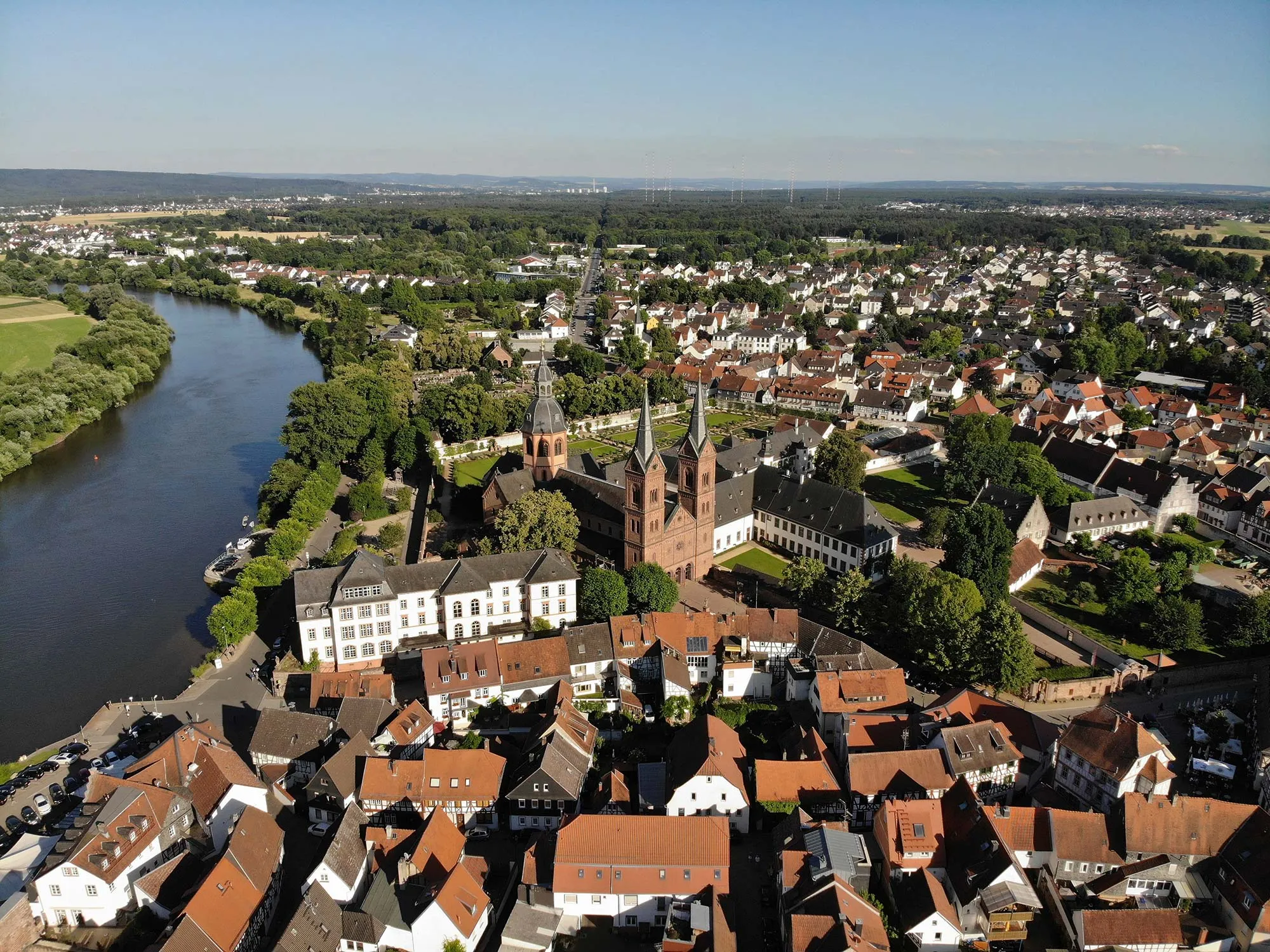
But Frankfurt is not all about work. Hardly anywhere else in Germany do you find international city life, nature, and culture so close together. It is a short way out into the countryside, such as the Taunus or the Odenwald mountains. Around 574,000 hectares of forest and recreational areas are available for sports and leisure activities. That is almost 39 percent of the region’s area.
Numerous renowned museums, institutions, and festivals make for a lively cultural life. This makes FrankfurtRheinMain a wonderful place to live and work.

Is Frankfurt a fintech and blockchain hub?
Frankfurt has a number of startups and innovative companies in the financial sector. Historically, however, many people have chosen to work for one of the many financial companies because they pay very well. Still, the fintech community continues to grow every year, and new technologies such as blockchains and decentralized finance are increasingly working together with established financial companies.
From 2022 to November 2024 I worked at a Frankfurt fintech, first as Head of Decentralized Finance and Node Operations, then as Chief Information Officer. In spring 2022 I started the Frankfurt Blockchain Meetup at TechQuartier with three co-organizers.
Related links:
Searches this page answers
- Frankfurt financial center
- Frankfurt financial capital of Europe
- Frankfurt fintech
- Frankfurt blockchain
- Frankfurt crypto
- Frankfurt startups
- Frankfurt stock exchange
- Frankfurt Deutsche Börse
- international banks Frankfurt
- Frankfurt BaFin
- Frankfurt skyline
- DE-CIX Frankfurt
- Frankfurt Rhine-Main metropolitan area
- living in Frankfurt Germany
- Frankfurt Brexit