Working with blockchains
New business models
Only a few people have really understood the impact that blockchains (and distributed ledger technologies in general) will have. In recent years, innovation in digital assets has developed into a serious economic sector. Hundreds of millions of dollars are invested in cryptocurrencies such as bitcoin, ether, and cardano.
The first generation of blockchains, Bitcoin above all, has been used as a store of value. The second generation, such as Ethereum, could already carry out complicated transactions with smart contracts. Because of technical limitations, Ethereum can hardly scale any further. A number of new blockchains will open up completely new business models in the future. One thing is very clear to me: The coming decades will be a great success story for the new blockchains and other DLT projects.
This is precisely why I try to understand what each of them is good for, follow technical developments, and teach myself blockchain programming. There is a good reason for this: when experience, ideas and trends come together, better solutions to problems can be created.
Cryptocurrency is not new to me: I ran my own miners and a Bitcoin full node as early as 2015. The evolution of blockchains is currently opening up new opportunities, and I want to play an active part in them.
Solving problems
There are currently more than 100,000 coins and tokens in the blockchain market. The number of currencies out there is almost bewildering. But only very few solutions are innovative and sustainable. For some, the only thing that counts is quick money: pump up the cryptocurrency, cash out, and walk away. But the big innovations usually happen quietly in the background. One example is the development of the Cardano blockchain, which aims to remove existing shortcomings of Ethereum and other blockchains. Since fall 2021, developers have been able to use Cardano’s own programming language to bring new DApps (“Distributed Apps”), oracles (interfaces), and smart contracts (complex transactions) onto the Cardano blockchain.
The tools for this new world are only now being created. But what these technical innovations lack is programs that solve real problems. This is exactly where I want to bring in solutions for the finance, insurance and/or real estate industries.
How I can help
Concept
Propose solutions to problems using blockchain protocols.
Flows and processes
Design and implement IT-driven business processes that meet specific goals.
Sales
Market and sell solutions in the blockchain space.
Roadmaps
Ensure that the technology matches the planned development steps of the product.
Presentations
Communicate the planned or completed steps in order to achieve a successful product.
Coordination
Work together with colleagues, decision makers, business partners and external companies.
Creating information architecture
An important factor in the success of a blockchain project is whether it has a real purpose and can actually solve problems. The fact that a blockchain handles these problems in the background of an app or DApp should be completely irrelevant to most users. So the goal is to help users solve a specific problem or complete a task. Thanks to the new blockchains, new business models are particularly useful in these sectors: finance, insurance, and real estate.
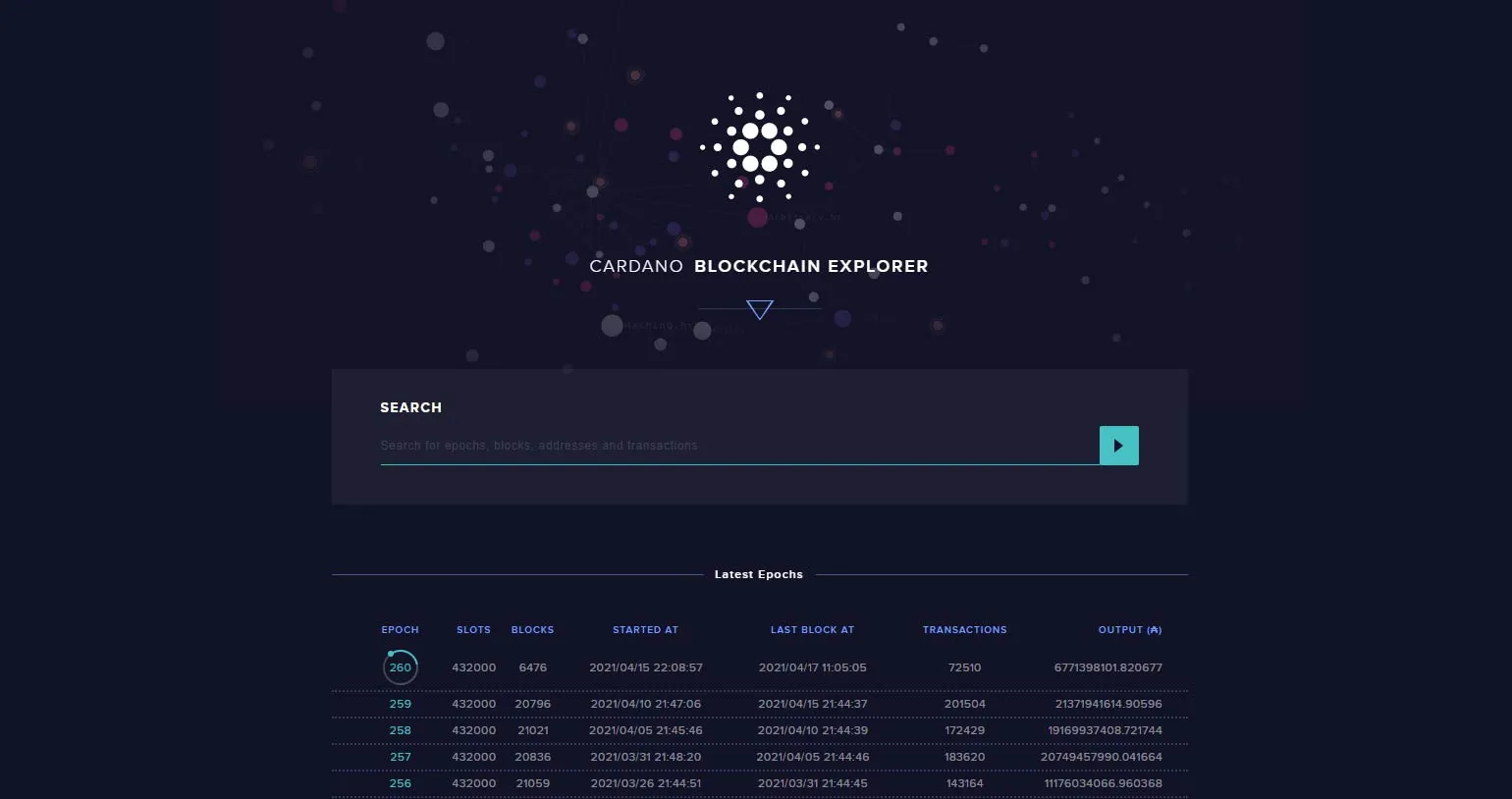
The Cardano Blockchain Explorer lets you look at the Cardano blockchain. Here is an example of a generated block that contains a certain number of transactions. It is easy to see that, for example, no IP addresses are stored. In a similar way, you can look at any other blockchain with its own explorer.
Regulation is expected
Blockchain projects are not always transparent from a technical point of view either. There are protocols like Ripple that have a private area for interbank transactions. The Monero blockchain goes even one step further: it stores transactions in such a way that tracking payment details is difficult, if not impossible. On the one hand, this is an advantage for obfuscation; on the other, it is likely to have a negative effect when lawmakers bring in the expected regulations.
Meme tokens and shit tokens in particular are likely to fall victim to regulation after millions of private investors have burned their fingers and lost their investments. Above all, I also expect centralized and decentralized crypto exchanges to be regulated, for example to prevent wash trading. Another field of regulation could be transparency rules on how crypto projects obtain funding before or during an Initial Coin Offering, Initial Exchange Offering, Initial DEX Offering, crowdloan, or other means of financing.
From what I observe, stablecoins face particular regulatory pressure. Although these coins are at parity with the US dollar “on paper”, they are often not actually backed by the full amount of money in circulation. Their holders are also not protected against total loss. The crash of some of these stablecoins could even trigger a new financial crisis, because significant value is now held in stablecoins. In addition, some or all stablecoins are restricted or banned in certain jurisdictions: after all, crypto projects are usually traded using them.
Finance Loop
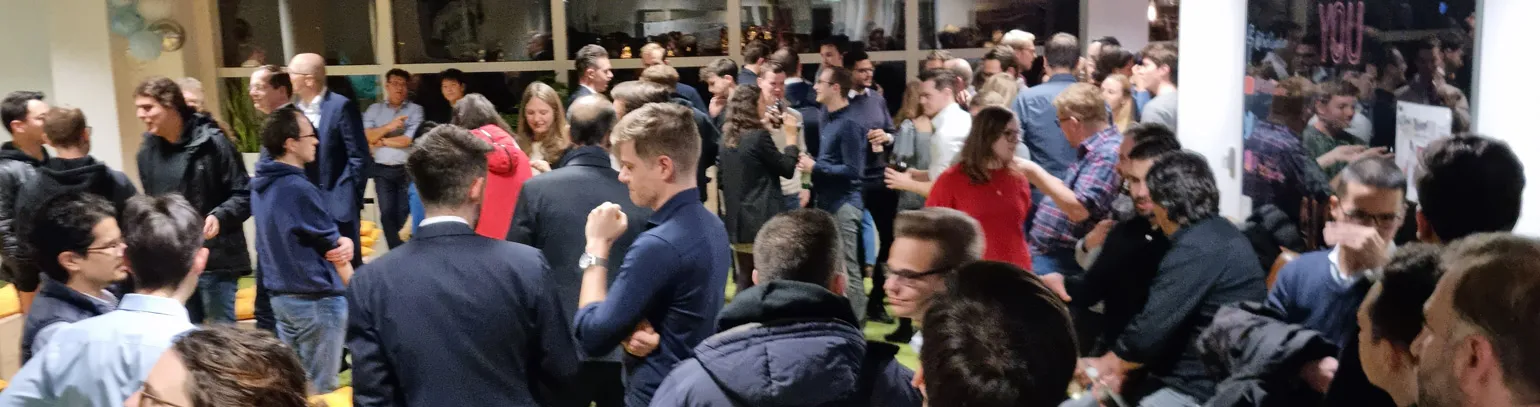
Some months ago I helped launch Finance Loop, an ecosystem that combines finance, emerging technologies, and regulatory compliance. Today, more than 3,000 people are connected to this on-chain finance ecosystem. Finance Loop has been working with leading finance and fintech organizations such as the banking association Frankfurt Main Finance, Chainlink and OKX Institutional. More details: www.finance-loop.net
Member of the German Bitcoin Association
In 2024, the German Bitcoin Association (Bitcoin Bundesverband) was founded at the German Parliament in Berlin, and I was there as a founding member. The Bitcoin Bundesverband primarily represents the interests of entrepreneurs and companies that work with Bitcoin. Further information: https://bitcoin-bundesverband.de/en/members/
Digital Token Identifier Foundation
In May 2024, I joined the Digital Token Identifier Foundation (DTIF) as an expert member of the Product Advisory Committee (PAC). As a member, I now work with other industry experts on the future of digital asset standards. It is a step in the right direction for the adoption of DTIs in Germany and other countries.

Blockchain certifications
When I took on a new professional challenge as Head of DeFi/Node Operations at the Frankfurt-based company Blocksize Capital in 2022, I completed some crypto certifications. The first of these was passing the Certified Bitcoin Professional (CBP) exam. Then I took the Certified DeFi Expert exam offered by the Blockchain Council, which covers a general understanding of the Decentralized Finance market.

Chainlink node operator
As Head of Node Operations at Blocksize Capital, I was responsible for operating the blockchain infrastructure in several data centers between 2022 and 2024. Together with my team, I made sure that smart contracts (and thus DEXs in particular) received reliable market data. Blocksize Capital is one of the highest-quality Chainlink node operators and runs a large number of blockchain nodes for protocols such as Ethereum and Avalanche.
As a Chainlink supporter, I also helped build communities around blockchain, Web3, smart contracts and, of course, market data.
In April 2024, I organized a Chainlink event in Frankfurt as a pre-event to the Crypto Assets Conference.

Compliant crypto market data
Professional market participants such as asset managers, trading venues, and banks need reliable market data to trade and hold cryptocurrencies. Unfortunately, even in 2022, there were still serious gaps in compliant market data on digital assets traded on blockchains. Many users rely on providers like CoinMarketCap or CoinGecko for their prices without thinking about the challenges involved in determining prices.
That’s why, in summer 2022, I created a new product at Blocksize Capital that gives institutional users one of the first compliant, transparent sources of price data: the company’s Connect product. It provides real-time trading data and historical data on hundreds of liquid and illiquid assets for commercial purposes. For example, customers can use it to find out how a price was determined and which trade prices the outlier detection flagged as outliers because of deviations, and to make sure that prices were not changed afterward.
Today, this crypto trading data is used by customers such as T-Systems and by well-known customers from the banking sector.
Monetizing financial data on blockchains
Blockchains with support for smart contracts have an incredible range of possible use cases, limited only by the inventiveness of the developers. While smart contracts can communicate with API endpoints, any “off-chain” API endpoint is a single point of failure, unlike the blockchain itself. From the perspective of blockchain decentralization, an API endpoint therefore cannot be trusted: the interface could be offline, hacked, or unintentionally sending false data. Oracle networks solve this problem.
Attending crypto conferences
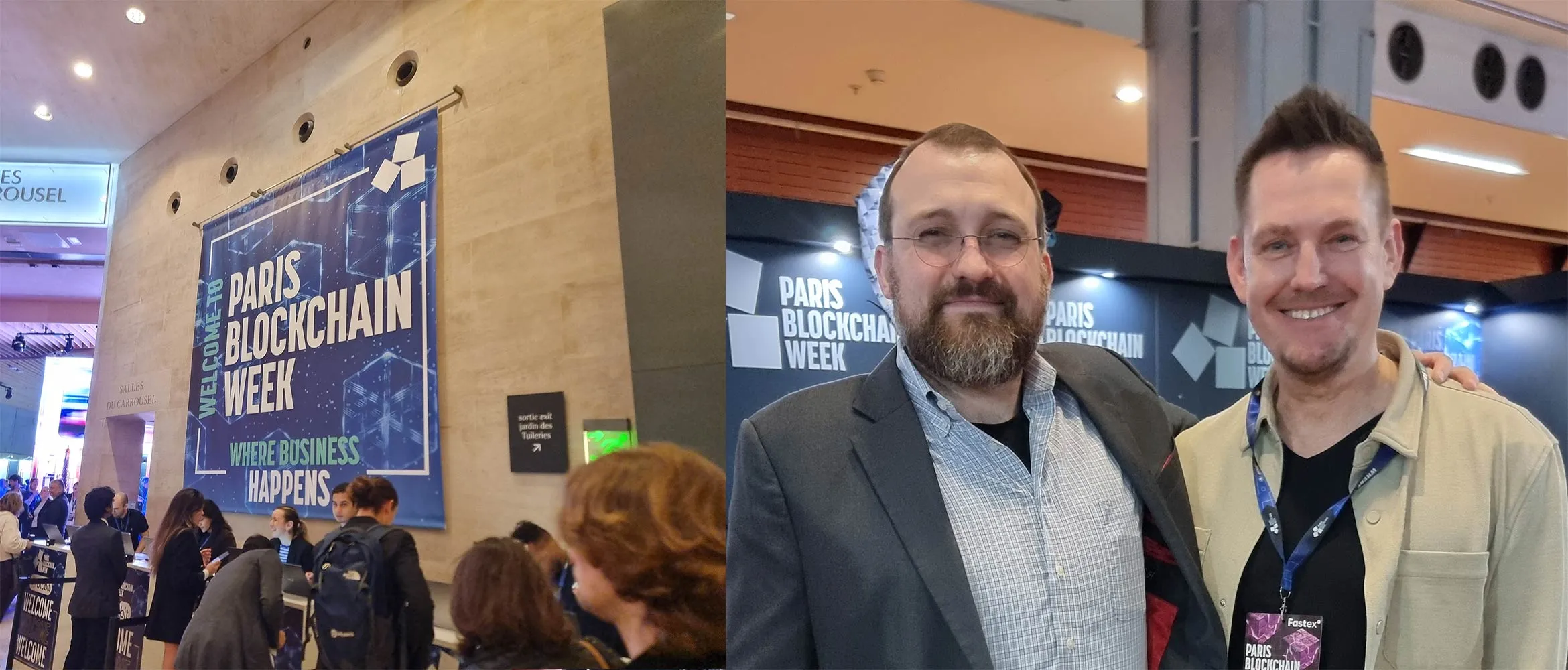
Over the past four years, I have attended more than 250 blockchain-related events, from major international conferences to small local meetups. Along the way, I have met a wide range of people, from protocol founders like Charles Hoskinson (pictured with me), the creator of Cardano, to everyday business professionals and passionate Web3 enthusiasts. I really enjoy meeting people and exchanging ideas about the potential of DeFi technologies.