Blockchain consultant for the Mittelstand in Germany
You want to know whether a blockchain fits your product before you spend a budget on it. I check your use case against what a chain does well and what a database does better. If a chain fits, I plan the first version with you and coordinate its build. Let's talk about your needs in a free 30-minute video call.
What I take care of for you
-
Blockchain experience
I have run blockchain infrastructure and taken a blockchain data product to market. I judge a use case by what your customers get from it, and I tell you when a database serves them better.
-
Nodes in production
At a Frankfurt fintech I was responsible for blockchain nodes in several data centers, for protocols such as Ethereum and Avalanche. The nodes supplied prices to smart contracts.
-
A product for regulated customers
I wrote the concept of a market data product for institutional users and led its rollout. Customers such as T-Systems and customers from the banking sector use its data.
-
Standards for tokens
On the Product Advisory Committee of the Digital Token Identifier Foundation I work with other experts on standards for digital assets. A token your firm issues can carry an identifier under ISO 24165.
-
Certificates
I passed the Certified Bitcoin Professional exam and the Certified DeFi Expert exam of the Blockchain Council. I have run Bitcoin miners and blockchain nodes since 2015.
-
Based in Frankfurt
I live in Frankfurt, work remote for firms across Germany and come on site for the use case workshop. I work in German and English.
Does your product need a blockchain?
It needs one when several parties write to the same record and none of them should control it alone. A blockchain is a shared record that no single party can change afterward. For data that one company owns and its customers trust, a database costs less to run and can be corrected.
Often the question comes from outside, from a partner who proposes a shared ledger or a customer who asks about tokens. An answer before the first budget saves a firm a project it does not need.
Seven questions before a blockchain project
Answer them for your use case before our call. Yes answers to the first three make the case for a chain; the last four shape how it is built.
| Question | If yes | If no |
|---|---|---|
| Do several companies write to the same record? | A shared ledger is worth a look | A database with an audit log does the job |
| Would any of them object if one party ran the database? | The chain replaces the party nobody wants in charge | The party the others trust runs a database |
| Must outsiders be able to check the record? | A public chain | A permissioned ledger or a database |
| Does a smart contract need data from outside the chain, such as a price? | An oracle network, planned from the start | No oracle needed |
| Does the record hold personal data? | The data stays off the chain, and only its fingerprint (a hash) goes on it, because a chain cannot delete an entry | The data can go on the chain |
| Will a token change hands? | A lawyer checks the regulation early, and the token gets an identifier under ISO 24165 | Tokens stay out of the first version |
| Must your customers hold a crypto wallet? | Plan how they get one, and test that step with real customers | The chain stays behind your app, out of sight |
What I have run on blockchains
At the Frankfurt-based company Blocksize Capital I was Head of Decentralized Finance and Node Operations, then Chief Information Officer. The company was a node operator in an oracle network that delivers market data to smart contracts, above all to decentralized exchanges. I took over the operation of those nodes and their documentation, built up the node operations team and later moved the infrastructure from Azure to another cloud with failover.
With colleagues from several teams I created a market data product for institutional users: real-time and historical trading data on hundreds of liquid and illiquid digital assets (asset count at the launch in 2022). Customers can see how a price was determined and which trades the outlier detection flagged. As CIO I helped write its terms, price definitions and API methodologies, the documents a bank’s compliance team reads before it signs.
I have attended more than 250 blockchain events, and I write about digital assets as an editor at the business magazine Business Punk.
Who I am
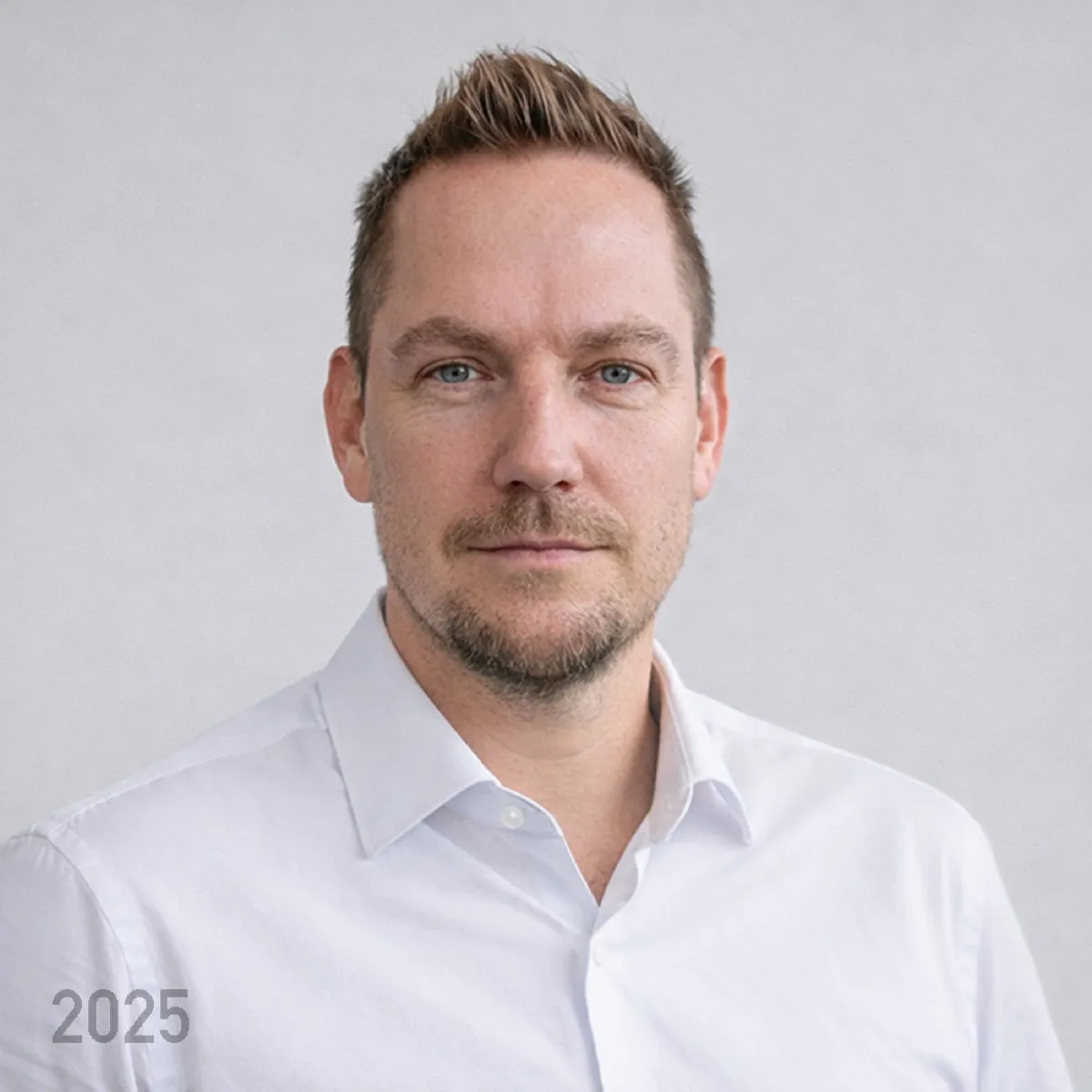
I am Michael Wutzke, an IT architect in Frankfurt with more than twenty years in IT and media. Before blockchains became my job I built life insurance portals and a search for a real estate database. Finance, insurance and real estate are the fields where I look for blockchain business models. Details: Working with blockchains.
How a blockchain consultation runs
-
Free video call
In 30 minutes you describe the use case, and I name the questions that decide it.
-
Use case workshop
We go through the use case with the seven questions on this page, on site or by video, together with the people who know the process and the partners.
-
Quote and order
After the workshop you get a quote. When you accept it, the work starts.
-
Recommendation
You get a written recommendation for a public chain, a permissioned ledger or a database, with the reasons for it.
-
First version
If a chain fits, I plan the first version, build the application around it and coordinate the developers who write the smart contracts.
-
Decision
Your partners or customers try the first version on a test network. You decide on the product with their feedback in hand.
Questions companies ask
When does a company not need a blockchain?
When one company owns the data and its users trust it. A database is then cheaper to run and faster to change. A blockchain pays when several parties write to the same record and none of them should control it alone.
Public or permissioned blockchain?
A public chain suits data that anyone may check, such as the prices smart contracts use. A permissioned ledger suits a group of known partners who keep part of the data private; Ripple, for example, keeps a private area for transactions between banks.
What is a blockchain oracle?
A smart contract cannot fetch data from outside its chain. An oracle network delivers it, for example an asset price, from several independent nodes, so one interface that fails or sends false data does not break the contract. I was responsible for such nodes at a Frankfurt fintech.
Do you write smart contracts yourself?
I teach myself blockchain programming and know what a contract can do. For production contracts I work with developers who specialize in them and coordinate their work with the rest of the product.
Can you join our team as a blockchain expert?
For companies that want a blockchain lead in their team, the page Head of Blockchain describes the positions I take on. This page is about project advice for firms that want an answer first.
Do you work on site?
I live in Frankfurt and meet clients on site in Frankfurt Rhine-Main. For firms elsewhere in Germany I travel for the workshop; the rest runs remote. I take on blockchain consulting as freelance projects, in German and English.
Details on the work behind this page
-
Working with blockchains
I run blockchain nodes and look for DeFi applications that solve real problems in finance.
-
Real-time market data for digital assets
A market data product for institutional users, delivered over WebSocket and RPC.
-
Node operations and a cloud migration with failover
Blockchain nodes and an oracle network in several data centers, then a move from Azure with failover.
-
Joining the advisory committee for digital token identifiers
In May 2024 I joined the Product Advisory Committee of the Digital Token Identifier Foundation, the registration authority for ISO 24165.
Your blockchain consultant in Germany
I am Michael Wutzke, a blockchain consultant in Germany, based in Frankfurt. In a free 30-minute video call we talk about your use case, and you learn which of the seven questions on this page decide it.
Searches this page answers
- blockchain consultant
- blockchain consultant meaning
- blockchain consulting
- blockchain consulting services
- blockchain advisory
- blockchain advisory services
- blockchain expert
- crypto consultant
- blockchain for small business
- blockchain business ideas
- blockchain use cases
- blockchain use cases in financial services
- blockchain use cases in real estate
- blockchain in real estate transactions
- blockchain for insurance companies
- blockchain vs database
- blockchain vs traditional database
- blockchain vs centralized database
- blockchain vs shared database
- blockchain and database difference
- blockchain proof of concept
- blockchain advantages and disadvantages
- blockchain disadvantages
- public blockchain disadvantages
- private vs public blockchain
- private vs public blockchain and use cases
- blockchain oracles
- blockchain oracle problem
- blockchain oracles explained
- tokenization of assets
- tokenization of assets meaning