Conversion optimization
Who needs conversions?
To put it simply, conversion optimization means taking as many users as possible to the next step. Bringing users toward this goal, especially in digital applications, isn’t trivial. Ultimately, the only reason visitors buy from you is the value of your offering. Before you invest in an optimization program, make sure you are providing value that is in demand. If not, you probably need strategic advice.
How conversion works
Conversion optimization is more than turning more users toward goals. It means creating a useful and integrated presentation. In simple terms, conversion rate optimization (CRO), or conversion optimization, is the process of finding out why your website visitors are not taking the desired action(s) and fixing those reasons, or issues, to achieve a higher conversion rate. At the process level, conversion optimization follows this scientific process.
5 steps to success

Research phase
Tracking metrics and identifying which parts of the conversion funnel need fixing

Hypothesis phase
Constructing educated hypotheses based on your research

Prioritization phase
Planning and prioritizing your hypotheses

Testing phase
Testing the hypotheses against the existing version of the website

Learning phase
Deploying the winning hypothesis and/or gathering lessons for subsequent tests
The numbers matter
Before you start your optimization program, have an analytics engine in place. Analytics is what tells you why visitors aren’t converting. Even as far back as 2016, more than 60% of the world’s top businesses were using Google Analytics. The pitfall of not having analytics in place is that your optimization efforts will be like throwing darts in the dark and hoping that some of them stick. Having analytics integrated with your testing engine is important for post-test analysis and learning.
Know your flows
Every website that exists to make revenue has a user funnel that visitors need to travel through to become paying customers. Understanding the way users browse your website tells you the relative importance of each page and what improvements you can expect from optimizing any of the stages in the funnel. Chances are that you’ve come across a variety of conversion funnels while exploring online content. It is important to understand that these funnels all help map out a user’s journey to becoming a customer, but they are not all the same. A funnel can be consumer-focused (a purchase funnel) or website-focused, showing how users flow through the pages of your website.
I managed to increase the sales of a top eCommerce brand by up to 22% on mobile devices through changes to the funnels.
Michael Wutzke, Web Developer Frankfurt


Meaningful outcome
The very term “optimization” implies that CRO is about making something better. The first step to making revenue is to let people know about your product and drive relevant traffic to your website. Conversion optimization can kick in only when there is traffic that can be converted. And what’s worse than poor traffic is bad traffic. Conversion optimization can’t make visitors buy; it can only make buying easier for them.
And metrics are the language in which visitors talk to you. Unless you understand this language, you won’t be able to interpret the signals and see the symptoms that hide in plain sight.
Moving users ahead
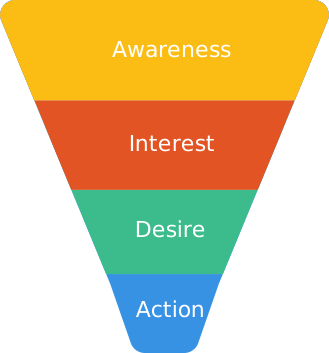
Most of us have heard of the AIDA framework before. An AIDA model defines how customers are addressed before they make a purchase decision: the basic stages of a customer journey. Not all your users are interested in the same information. As a result, you should always have landing pages set up that target short-tail and long-tail keywords. And you should aim these landing pages and ad campaigns at different sets of users, no matter where they are on the “ladder of interest”.
Feed your stats
It’s a no-brainer that before you can measure and improve, you need to know what you want to improve. This depends entirely on your business and your goals. Are you looking for more free trial sign-ups, higher average revenue per visitor, or top-of-the-funnel ebook downloads?
Here’s the interesting part. Not all visitors to your site are at the same stage of the buying decision. Some are looking to learn things, some are actively prospecting, and some others are ready to buy. The idea then is to track and optimize for conversions at the different stages of each of these users, whether you are talking about micro or macro conversions.
Micro conversions are typically low-involvement commitments from the user, like an ebook download or a newsletter subscription. Macro conversions, on the other hand, are actual sales conversions, like a checkout for an eCommerce business. It may seem that macro conversions are all that matter. However, micro conversions are the baby steps that visitors start with, and they eventually lead them to become customers.